

Dermatology
Actinic Keratoses
What Are Actinic Keratoses?
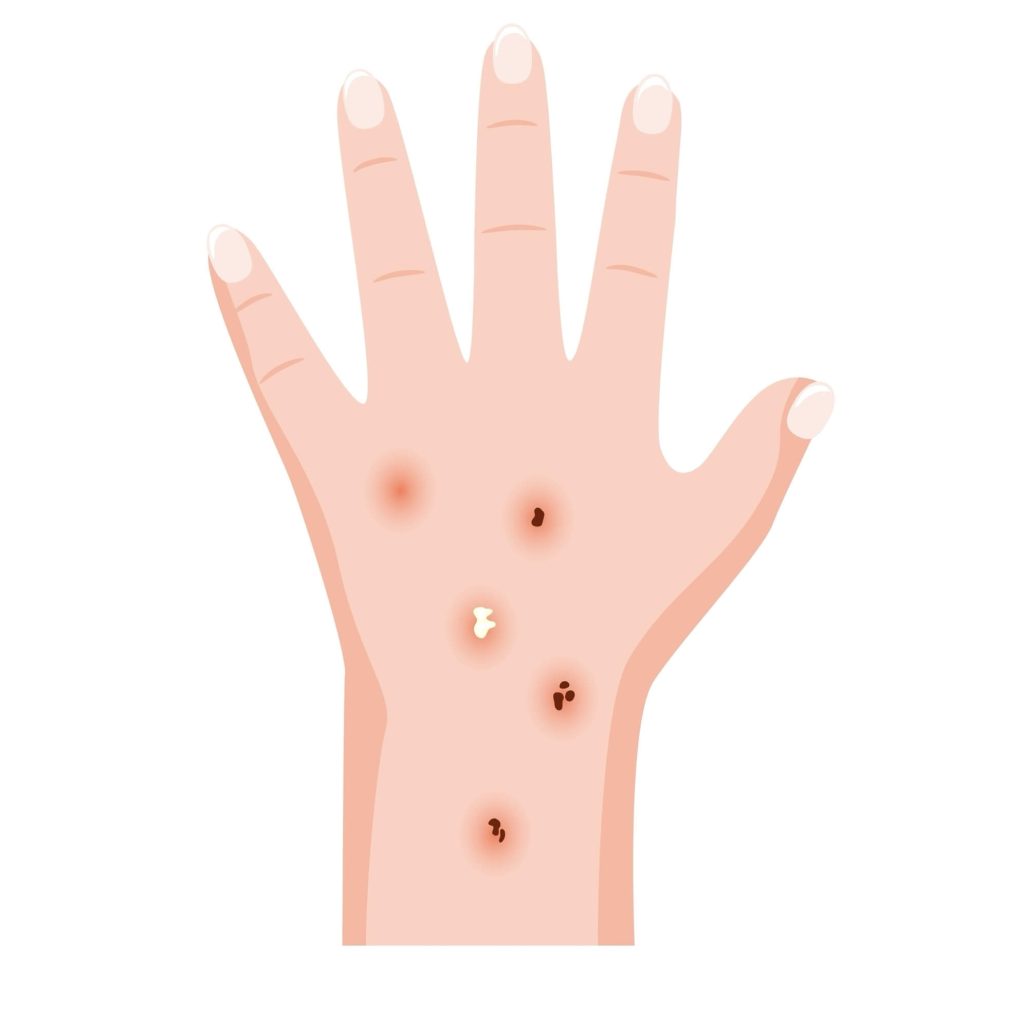
Actinic keratoses, or AK’s, are a common precancerous condition due to long-term sun exposure. They are seen in sun-exposed areas, such as the face, scalp, forearms, and hands. Actinic keratoses tend to “come and go”, and have a roughened, sandpaper-like texture. The lesions are typically red, pink, or light tan in color, usually develop slowly and typically reach a size from one-eighth to a quarter of an inch.
Two to five percent of all actinic keratoses will progress, if untreated, into a squamous cell carcinoma, the second most common form of skin cancer. The effective treatment and prevention of actinic keratoses will minimize the risk of malignant transformation.
Treatment
Liquid Nitrogen (Cryosurgery)
Liquid nitrogen is the most common treatment for actinic keratoses, particularly when there are a limited number of lesions. Liquid nitrogen is applied to the growth with a cotton-tipped applicator. No anesthesia is required, although slight stinging may be associated with the treatment. The treated area will become red, swollen, and irritated and a small blister may form. Over the course of the next several days, the lesion will crust and fall off. On occasion, an additional treatment may be necessary to completely clear the lesion.
Topical Treatment
Prescription creams and solutions are useful for treating regions that have multiple actinic keratoses. One advantage of topical medications is that they not only treat visible lesions but also treat subclinical lesions that are small and not yet visible to the naked eye. One disadvantage of these creams is that they need to be used for several weeks, and they typically cause redness, crusting, and swelling of the treated areas.
5-fluorouracil (5-FU) cream or solution. Brand names of this medication include Efudex Cream and Solution, Carac Cream and Fluoroplex. These medications contain 5-FU, an anti-cancer drug which attacks the precancerous cells. These creams may be used every day for 4 to 6 weeks or may be used in a “pulsed fashion”, where they are used for only a couple of days per week for a longer treatment period. Redness and scaling are common side effects.
Imiquimod cream (Aldara and Zyclara). Imiquimod cream stimulates the body’s immune system to destroy the precancerous cells. Aldara cream is typically applied 2-3 times per week for 6-12 weeks, based on the treatment response and level of irritation. Zyclara cream is applied once daily for 2 weeks, take a 2-week break, then again once daily for 2 weeks. Redness and scaling are common side effects.
Photodynamic Therapy (PDT). PDT involves applying a chemical (5-aminolevulinic acid) to the affected regions, followed by exposure to a strong light that activates the chemical and selectively destroys the actinic keratoses.
Solaraze gel (diclofenac sodium 3%) is a non-steroidal anti-inflammatory topical medication that has been proven to be effective in treating actinic keratoses. NSAIDs are known to provide both anti-inflammatory and anti-neoplastic (anti-cancer) benefits although it is not fully understood how Solaraze gel works. The medication is applied to the affected area twice daily for 90 days. Mild peeling/dryness is a common side effect.
Picato (ingenol mebutate) gel, is prescription medicine used on the skin to treat actinic keratoses (AK’s). Unlike other topical medications for actinic keratoses, Picato requires just 2 or 3 consecutive days of once a day application. It is thought that Picato’s active ingredient is an inducer of cell destruction specifically for AK lesions. Your skin may get red, flake, peel, scab or crust, swell, hurt, or itch during use of Picato and these changes may persist for 3-5 days after use. The majority of patients treated with Picato have a greater than 75% clearance of their AK’s.
Provided at These Locations























Walnut Creek – Ygnacio Valley
2255 Ygnacio Valley Road, Ste. B-1
Walnut Creek, CA 94598